
Lessons in Peace at Hiroshima
Today was one of the most powerful and emotional days of our journey as we visited the Hiroshima Peace Memorial Park and Museum.
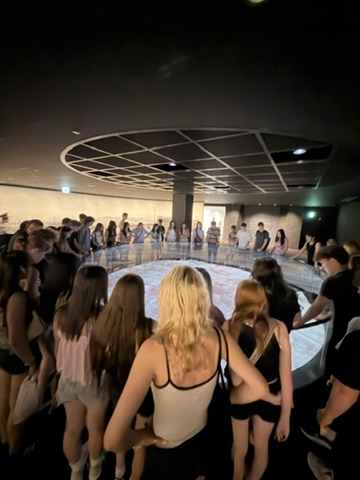
From the moment we arrived, there was a noticeable change in atmosphere. The park stands as both a memorial to the lives lost on August 6, 1945, and a call for peace for future generations. As students walked through the museum, they encountered photographs, personal accounts, artifacts, and stories that brought this chapter of history to life in a way that textbooks simply cannot.
Many of the images and exhibits were difficult to view. Burned belongings, damaged possessions, and the firsthand testimonies of survivors served as a stark reminder of the devastating human impact of war. It was a solemn experience that encouraged reflection, empathy, and thoughtful discussion among our group.
Yet while the museum does not shy away from the tragedy of Hiroshima, its lasting message is not one of despair. Instead, it is a story of hope, resilience, and peace. The voices of survivors consistently call for a world that remembers the past and works together to ensure such suffering is never repeated.
For our students, the visit carried an especially deep meaning because they had already encountered this history through their studies. Having read the story of Sadako and the Thousand Paper Cranes, students arrived with an understanding of her life and legacy. Seeing photographs of Sadako, viewing some of her personal belongings, and learning more about her story transformed the reading experience into something incredibly real.
Perhaps most moving of all was seeing the paper cranes themselves.
What had once been words on a page became a tangible connection to a young girl whose hope continues to inspire millions around the world. Students spoke about how seeing these artifacts gave them a much deeper appreciation of Sadako’s story and the message she represents.
This is the essence of experiential education. Learning extends far beyond the classroom when students can connect their studies to real places, real people, and real stories. The history explored today became personal, meaningful, and unforgettable. It is the kind of educational experience that remains with students long after a unit of study is complete.
The day concluded with a special contribution of our own.
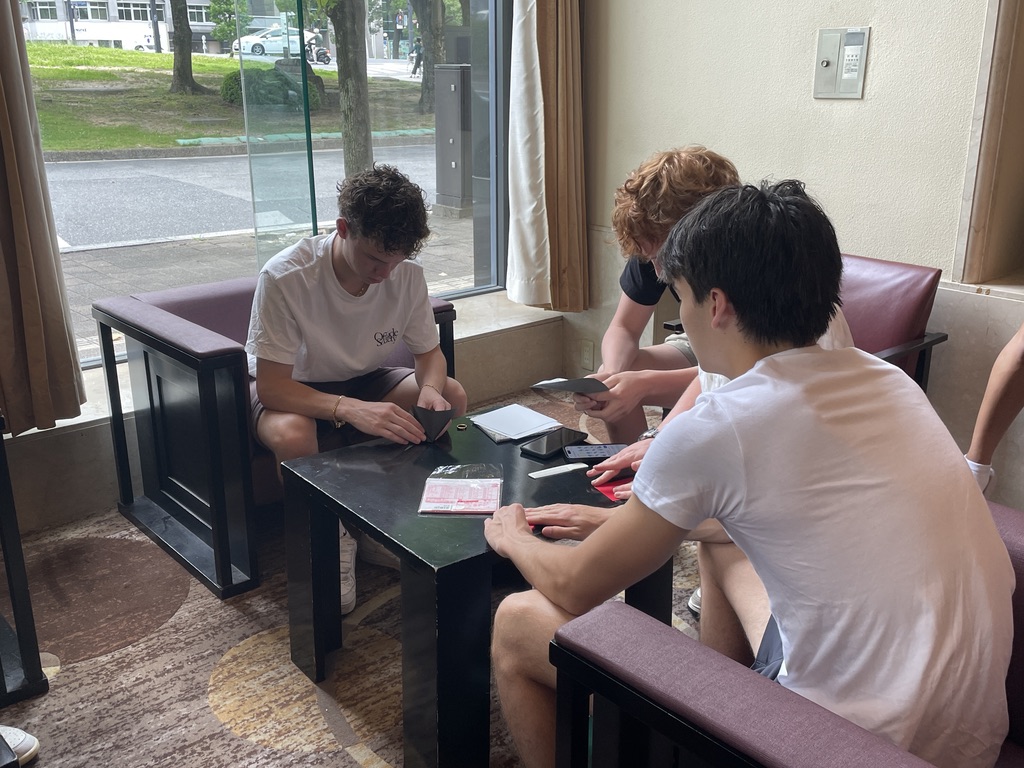
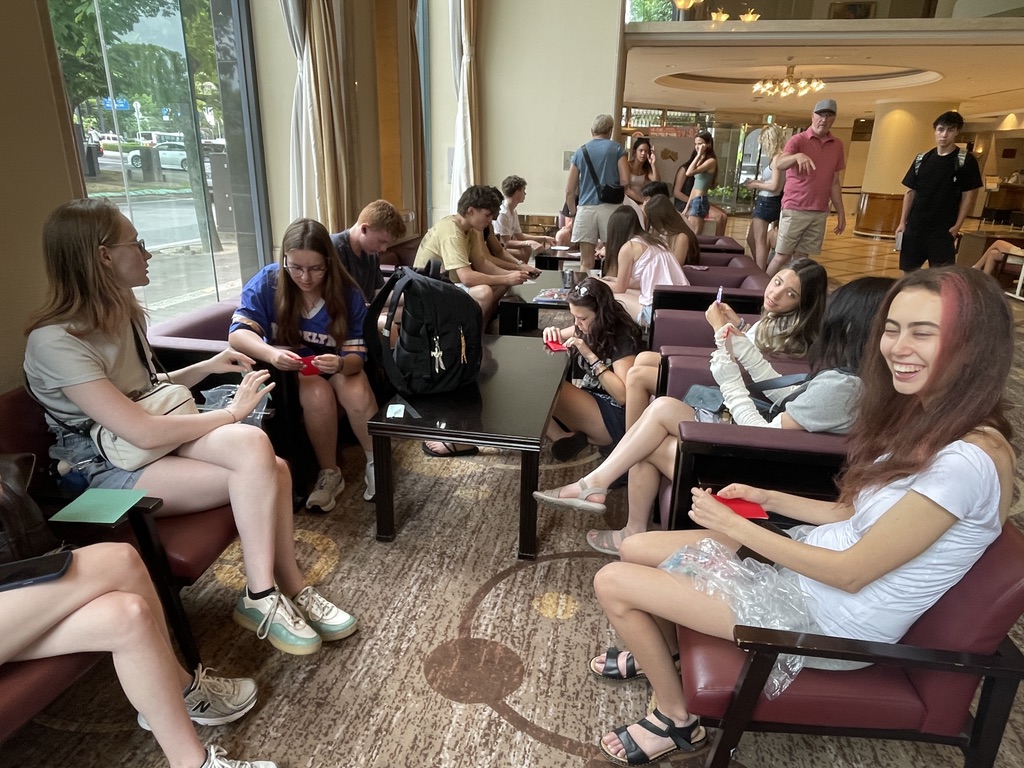
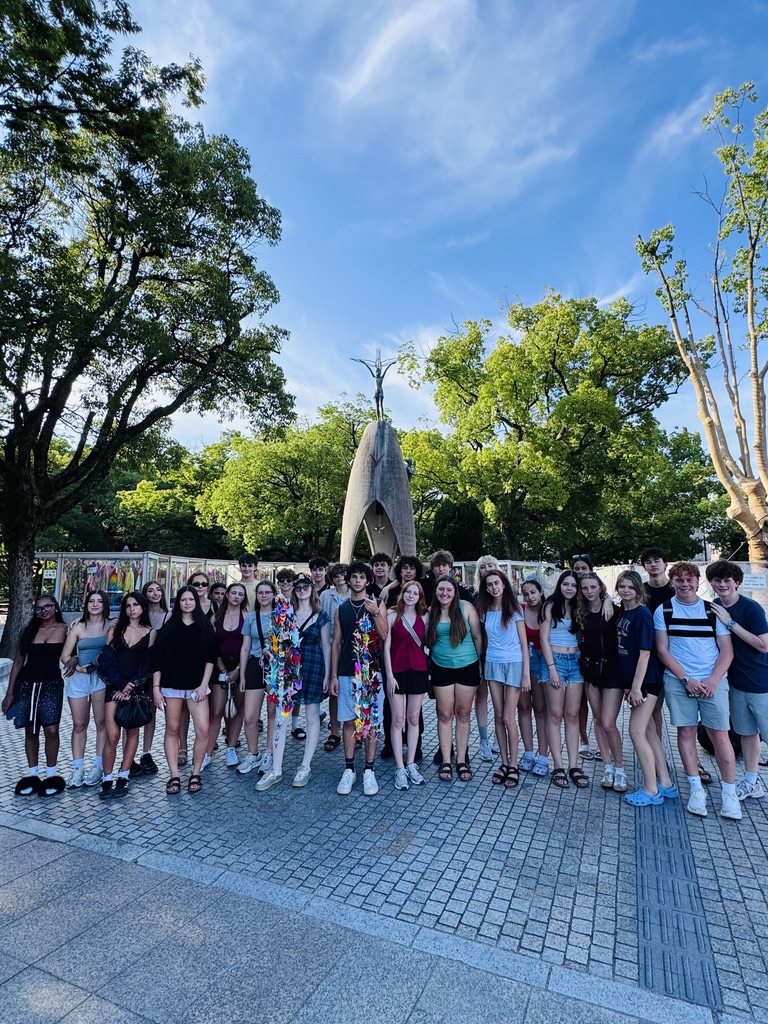
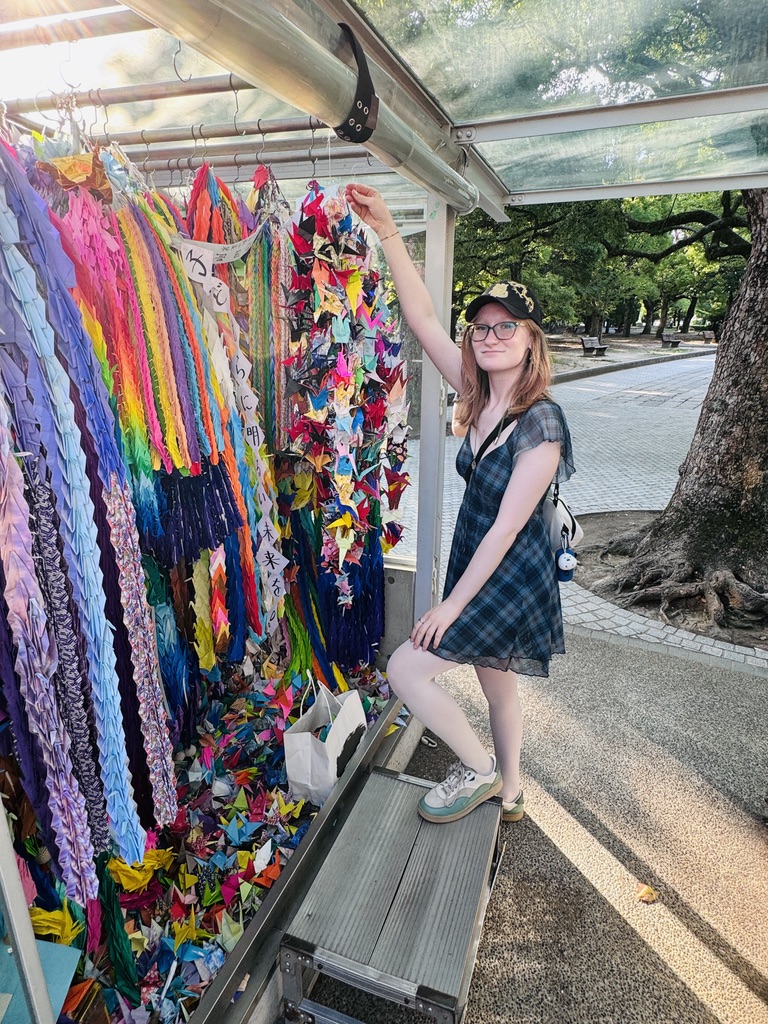
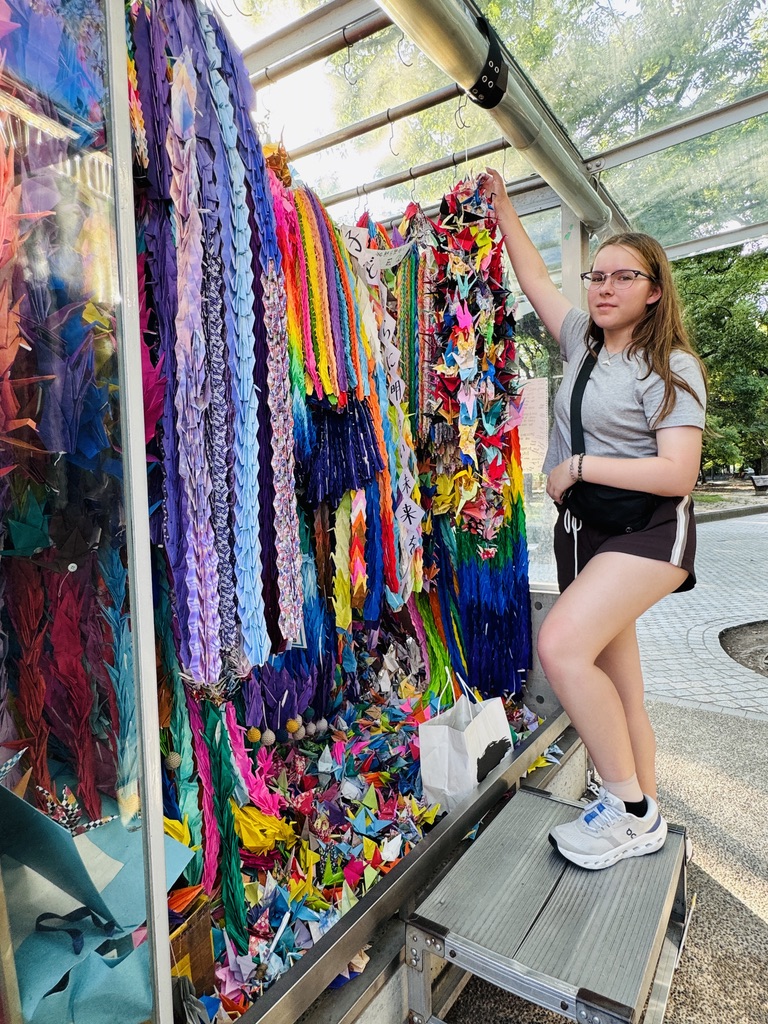
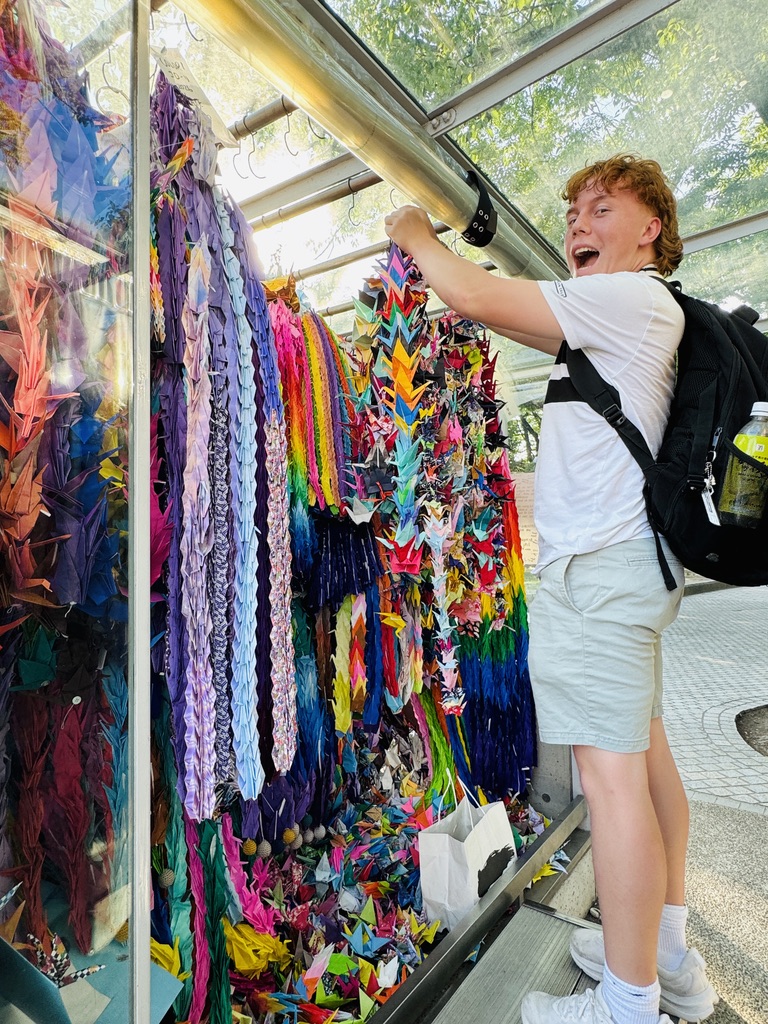
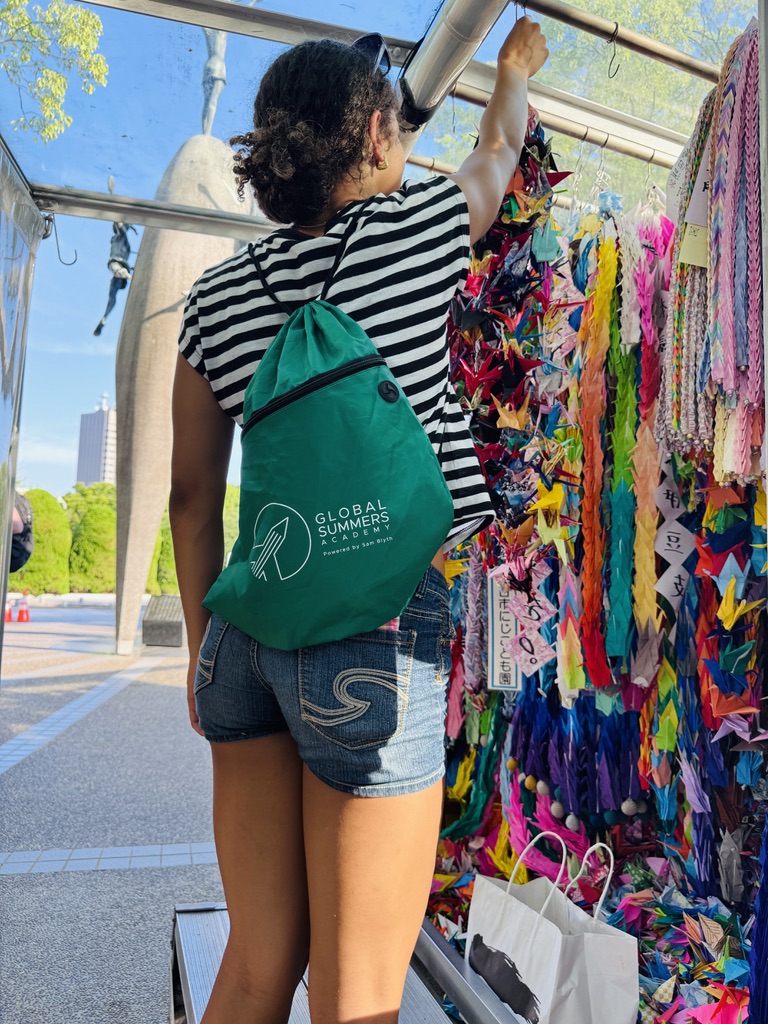
Before arriving in Hiroshima, students had worked together to create ribbons for one thousand paper cranes. At the Peace Park, they carefully assembled and hung them alongside the millions of cranes donated from around the world. It was a powerful moment of reflection and unity. Standing together, students added their voices to a global commitment to peace and remembrance.
As our colourful cranes joined countless others, they became a symbol of hope, understanding, and a shared promise to never forget what happened in Hiroshima.
Today was not an easy day, but it was an important one.
A day of reflection. A day of learning. A day of remembrance.
And ultimately, a day dedicated to the enduring belief that through understanding the past, we can help build a more peaceful future.